


Wedding expenses are mostly spent on food, the wedding venue, and the overall look of the event. Together, these areas usually account for more than 50-60% of the total wedding budget. In most cases, catering and venue booking are the biggest expenses, followed by decoration, photography, and wedding outfits.
Every couple wants their wedding day to be special and memorable, but many are surprised by how fast the costs can increase. From choosing the right venue and arranging food for guests to paying for photography, entertainment, bridal wear, and decorations, every detail adds to the final expense. Knowing exactly where your money is being spent is important for better planning and avoiding unnecessary financial pressure. A Real Wedding Budget Breakdown can help couples understand how wedding expenses are usually divided and where they can make smart savings. In this blog, we will look at the main wedding costs, explain how budgets are typically distributed, and share useful tips to help couples plan their wedding more confidently and efficiently.
Understanding the Major Wedding Expense Categories
A wedding budget is not just a single number; it is a combination of many smaller expenses that work together to create the overall experience. While every wedding is unique, most budgets follow a similar pattern. Understanding these categories can help couples prioritise what matters most and allocate their funds wisely.
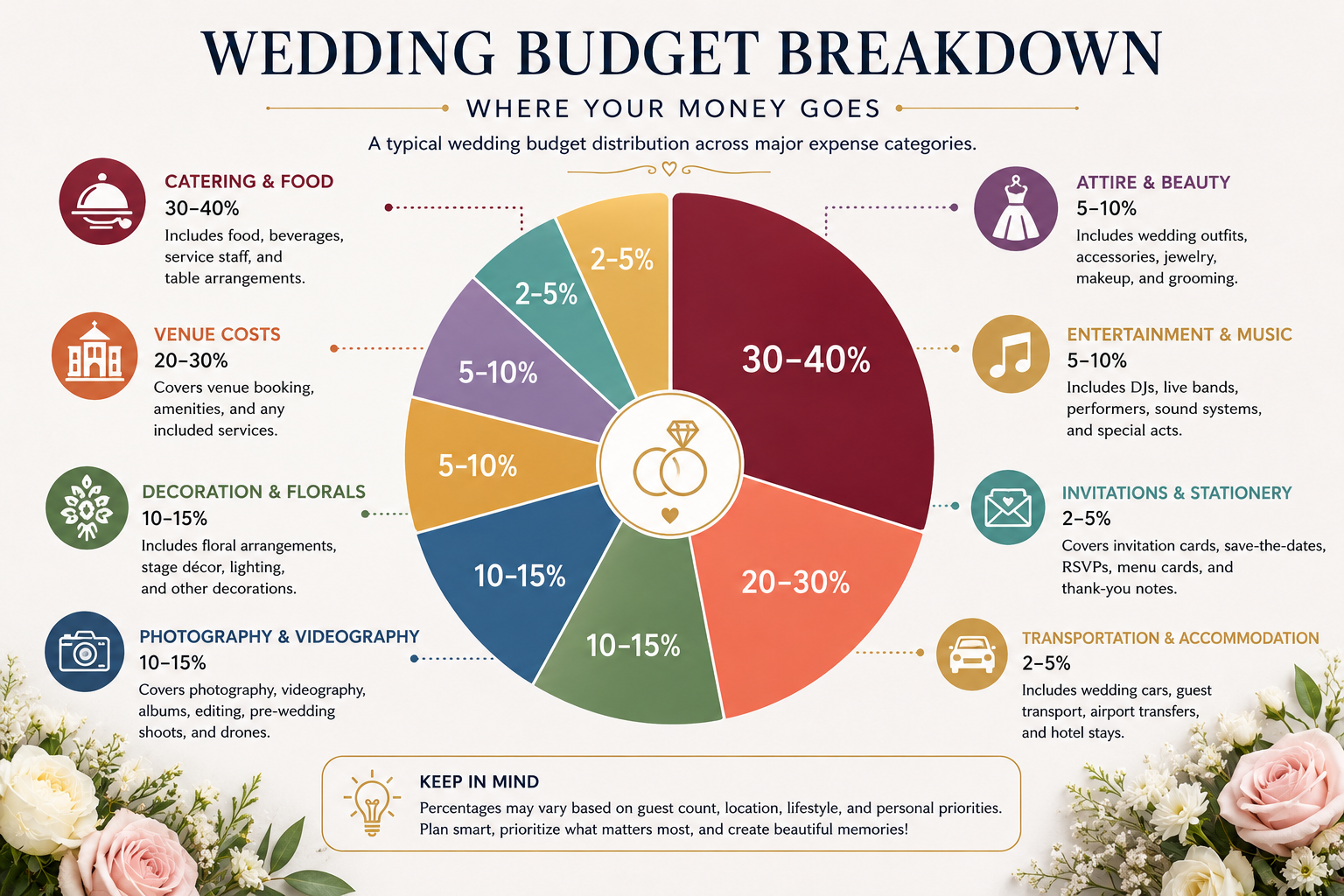
1. Catering and Food Costs (30-40% of the Budget)
Food is often the largest wedding expense because it directly affects every guest attending the celebration. Catering costs usually include appetisers, main courses, desserts, beverages, serving staff, and table service arrangements. The final amount depends on factors such as the number of guests, menu selection, service style, and location.
For example, a buffet-style meal may cost less than a plated multi-course dinner. Similarly, offering premium beverages or speciality food stations can significantly increase costs. Couples can manage catering expenses by finalising their guest list early, choosing seasonal menu options, and avoiding excessive food waste.
2. Venue Costs (20-30% of the Budget)
The wedding venue is another major expense and often sets the tone for the entire celebration. Venue costs can vary dramatically depending on the location, popularity, capacity, and included amenities. Luxury hotels, destination venues, and premium banquet halls generally charge higher rates than community centres or outdoor spaces.
Some venues offer all-inclusive packages that include furniture, lighting, catering, and coordination services. While these packages may seem expensive initially, they can sometimes provide better value than booking each service separately. Couples should carefully compare package offerings before making a decision.
3. Decoration and Floral Arrangements (10-15% of the Budget)
Decorations play a key role in creating the atmosphere and visual appeal of a wedding. This category includes floral arrangements, stage design, table centrepieces, lighting, draping, signage, and other decorative elements.
The cost of decoration depends on the wedding theme, venue size, and floral choices. Fresh flowers are beautiful but can be expensive, especially if they are imported or out of season. Couples looking to save money can consider mixing fresh flowers with reusable decorative elements, selecting seasonal blooms, or focusing decorations on high-visibility areas.
4. Photography and Videography (10-15% of the Budget)
Once the wedding day is over, photographs and videos become lasting memories. This is why many couples prioritise professional photography and videography services. Costs in this category may include pre-wedding shoots, wedding-day coverage, drone footage, edited albums, highlight films, and full-length wedding videos.
While it may be tempting to cut costs here, quality photography often provides long-term value. Instead of choosing the cheapest option, couples should evaluate portfolios, experience, and customer reviews to ensure they receive high-quality results.
5. Wedding Attire and Beauty Services (5-10% of the Budget)
Wedding outfits are another significant expense, especially when multiple events are involved. This category typically includes bridal wear, groom’s attire, accessories, footwear, jewellery, tailoring, hair styling, makeup services, and grooming.
Designer outfits and custom-made garments can quickly increase costs. Renting attire, shopping during sales, or choosing local designers can help couples maintain their desired look while staying within budget.
Also Read: How We Help Couples Stay Within Budget Without Compromising Their Dream Wedding
6. Entertainment and Music (5-10% of the Budget)
Entertainment keeps guests engaged and contributes to the overall wedding experience. Depending on the wedding style, this category may include DJs, live bands, traditional performers, dance groups, sound systems, and special performances.
The cost depends on the popularity and experience of the performers. Couples should determine whether entertainment is a priority and allocate funds accordingly. Sometimes a skilled DJ can create an equally memorable atmosphere at a fraction of the cost of a live band.
7. Invitations and Stationery (2-5% of the Budget)
Although invitations represent a smaller portion of the budget, they are still an important expense. Wedding stationery may include save-the-date cards, invitation cards, RSVP cards, ceremony programs, menu cards, and thank-you notes.
Digital invitations have become increasingly popular because they reduce printing and postage costs. Many couples choose a combination of printed invitations for close family members and digital invitations for other guests.
8. Transportation and Accommodation (2-5% of the Budget)
Transportation costs may include wedding cars, guest transportation, airport transfers, and shuttle services. For destination weddings or events with out-of-town guests, accommodation expenses can also become significant.
Booking transportation and hotel rooms well in advance often helps secure better rates. Couples can also negotiate group discounts with hotels when reserving multiple rooms.
Smart Ways to Reduce Wedding Expenses
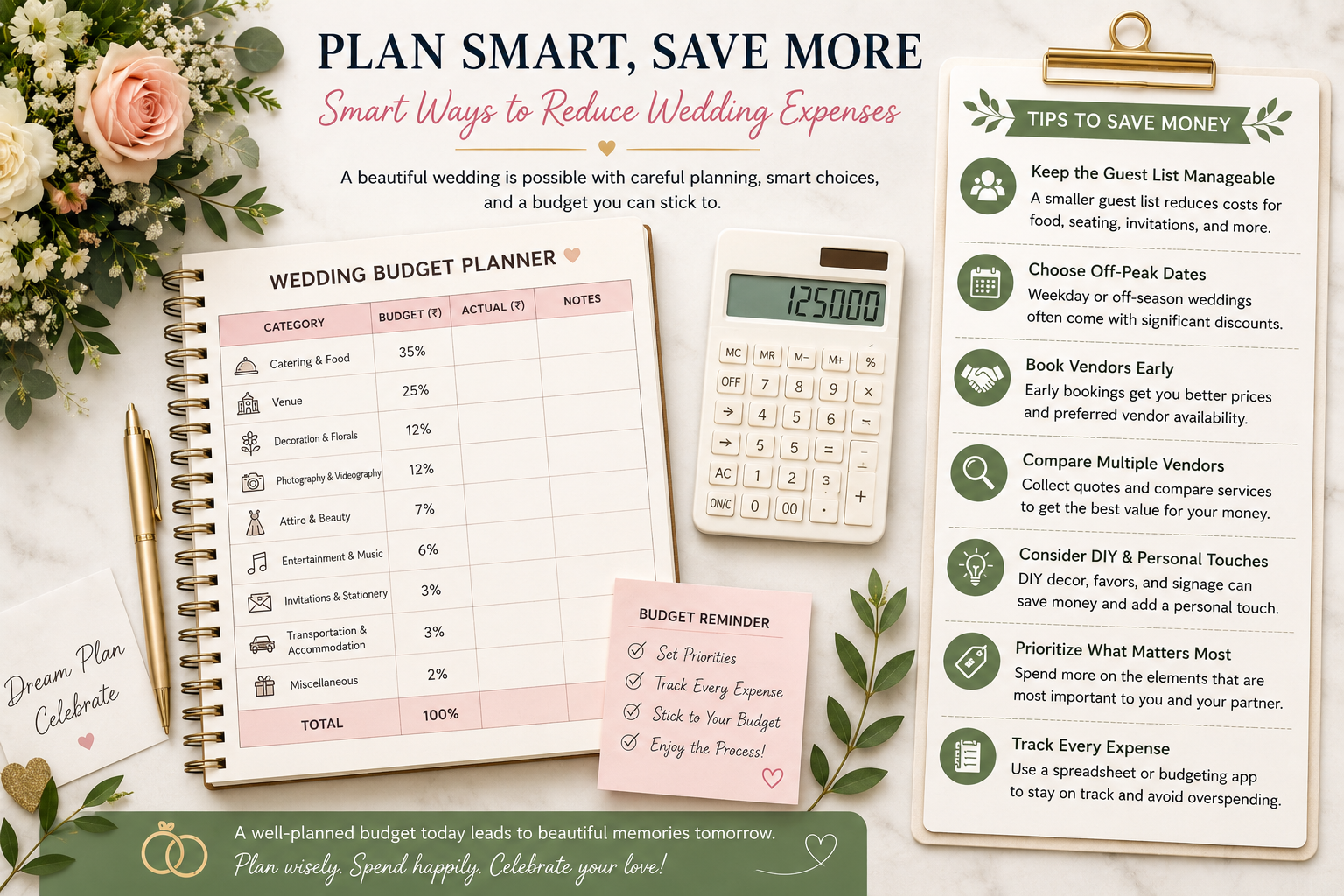
Planning a beautiful wedding does not always require spending beyond your means. Here are some practical ways to keep costs under control:
Create a detailed budget early: Establish spending limits for each category before making bookings.
Prioritise your must-haves: Decide which aspects of the wedding matter most and allocate more funds to those areas.
Keep the guest list manageable: A smaller guest list reduces costs for catering, seating, invitations, and venue requirements.
Book vendors early: Early reservations often come with better pricing and greater availability.
Choose off-peak dates: Weddings held during non-peak seasons or weekdays may offer significant discounts.
Compare multiple vendors: Obtaining several quotes helps identify the best value without sacrificing quality.
Consider DIY elements: Personalised decorations, welcome signs, or favours can reduce expenses while adding a unique touch.
Track every expense: Maintaining a spreadsheet or budgeting app helps prevent overspending.
Final Thoughts
A successful wedding is not defined by how much money is spent but by the memories created and the experience shared with loved ones. Understanding where wedding expenses typically go allows couples to make informed decisions and avoid unexpected financial stress. Catering, venue costs, and event design often consume the largest portion of the budget, but every category deserves thoughtful planning.
By creating a realistic budget, prioritising key elements, and exploring cost-saving opportunities, couples can enjoy a beautiful and meaningful celebration without exceeding their financial limits. A well-planned wedding budget provides clarity, confidence, and peace of mind, allowing couples to focus on what truly matters: celebrating the beginning of their new life together.